
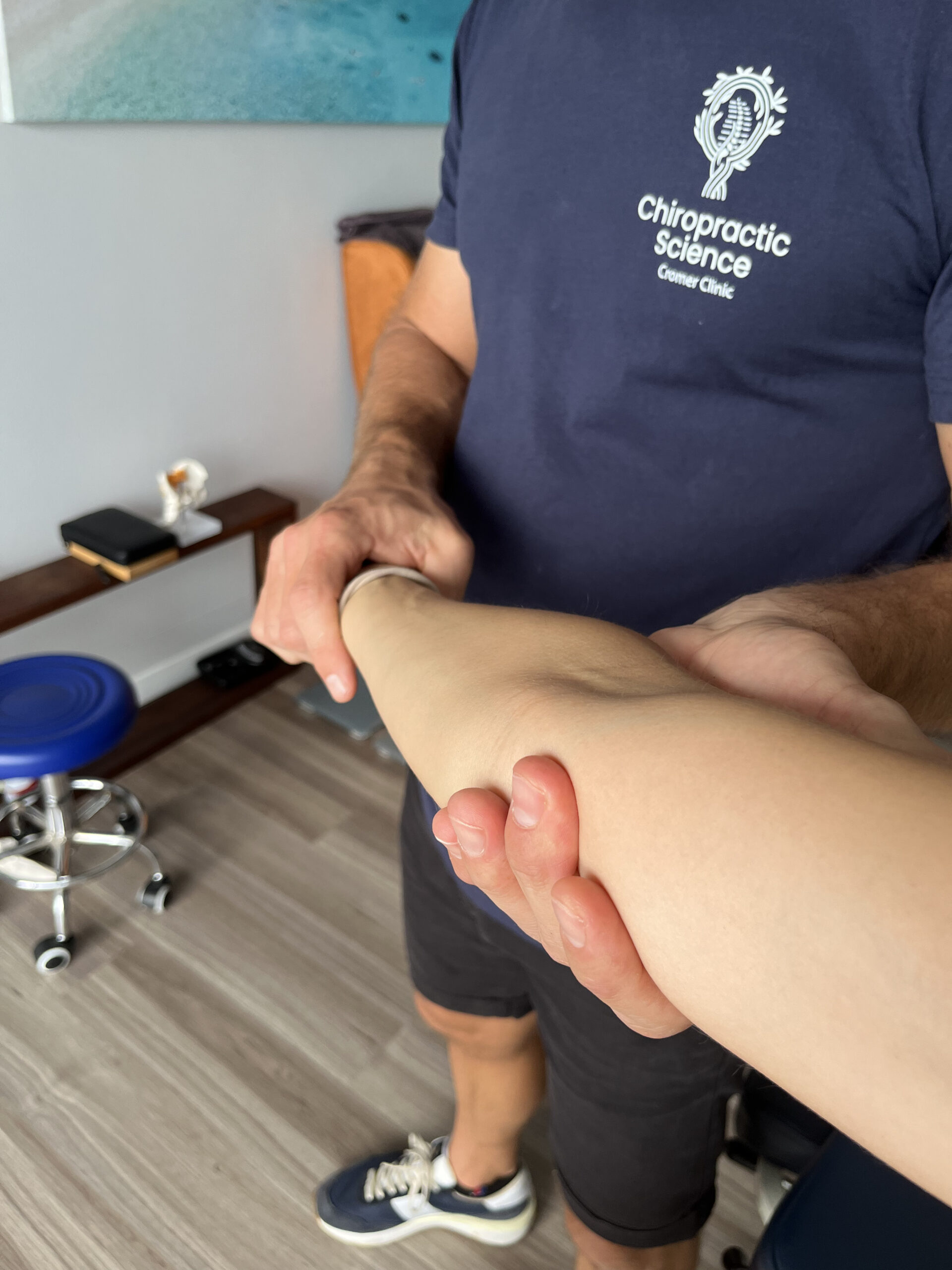
Elbow pain is commonly diagnosed as lateral epicondylitis (tennis elbow) or medial epicondylitis (golfer’s elbow). While these conditions involve irritation and degeneration of the tendons around the elbow, focusing only on the elbow itself often fails to address the true underlying cause.
For proper healing to occur, the elbow requires normal joint mechanics, adequate blood supply, and a strong, uninterrupted nerve supply. When any of these are compromised, tissue breakdown and delayed healing can result.
The elbow joint, forearm muscles, and surrounding soft tissues are supplied by nerves originating in the lower cervical spine, primarily from C5, C6, C7, and C8. These nerves exit the spinal cord through openings between the neck vertebrae and travel down the arm to control:
Muscle strength and coordination
Tendon integrity and resilience
Blood vessel tone and circulation
Tissue repair and healing capacity
Normal movement and alignment of the cervical spine are essential to maintain optimal nerve function to the elbow and forearm.
When a vertebra in the neck loses its normal position or movement, it can interfere with the function of the nerve exiting at that level. This interference does not usually cause complete nerve damage, but rather a reduction in the quality of nerve signalling.
When nerve signalling is reduced:
Muscles may weaken or fatigue more quickly
Tendons and soft tissues receive diminished neurological input
Circulation and tissue repair mechanisms are compromised
Mechanical load is distributed unevenly through the joint
Over time, the elbow is forced to compensate for this weakness, placing excessive stress on the tendon attachments at the medial or lateral epicondyle. This leads to tendon breakdown, pain, and slow or incomplete healing.
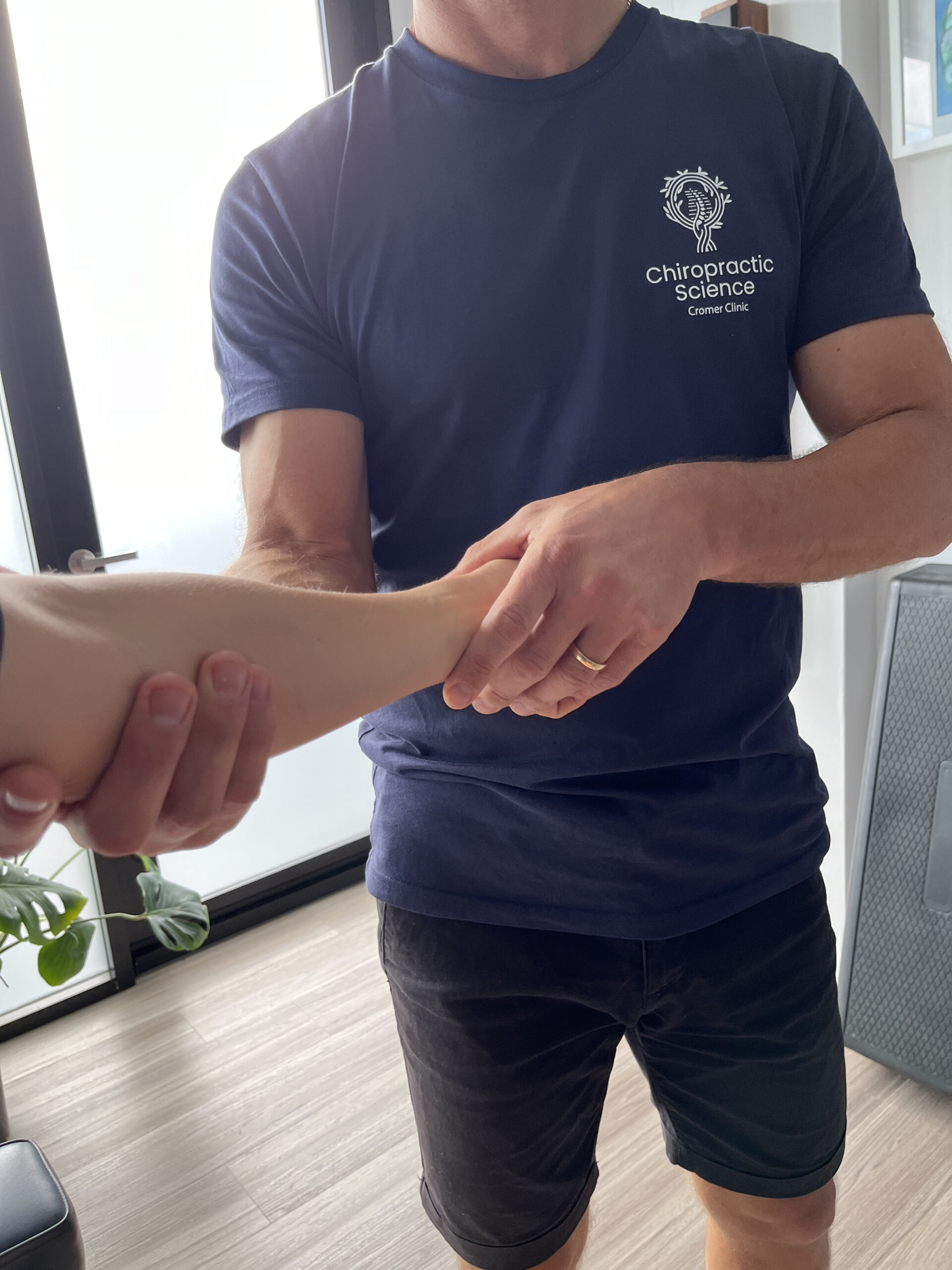
Many chronic cases of tennis or golfer’s elbow persist because treatment is directed only at the painful tendon, without addressing the neurological and mechanical contributors upstream.
If the cervical spine is not functioning correctly:
Muscles lose endurance and coordination
Grip and lifting mechanics become inefficient
Forces are poorly transferred through the elbow
Healing tissue is repeatedly overloaded
This explains why rest, injections, or isolated elbow treatments may provide only temporary relief.
At Zadar Sport Spine and Wellness, elbow conditions are assessed as part of the entire neurological and mechanical chain, from the cervical spine to the wrist.
Care may include:
Detailed assessment of cervical spine function and nerve supply
Specific spinal and extremity adjustments to restore joint movement
Evaluation of shoulder, elbow, and wrist biomechanics
Targeted soft tissue techniques to reduce abnormal tension
Progressive loading strategies to support tendon repair and resilience
By restoring proper nerve supply from the neck and normalising joint mechanics, the elbow is placed in the best possible environment to heal and regain strength.
You should seek professional assessment if:
Elbow pain persists or frequently returns
Grip strength or arm endurance is reduced
Pain worsens with activity despite rest
Previous treatment has failed to resolve the problem
Long-term resolution requires addressing both neurological control and mechanical function, not just the site of pain.